Coverage before maximum output
Define audience geometry, listening distance, and aiming boundaries before comparing SPL figures measured under different conditions.
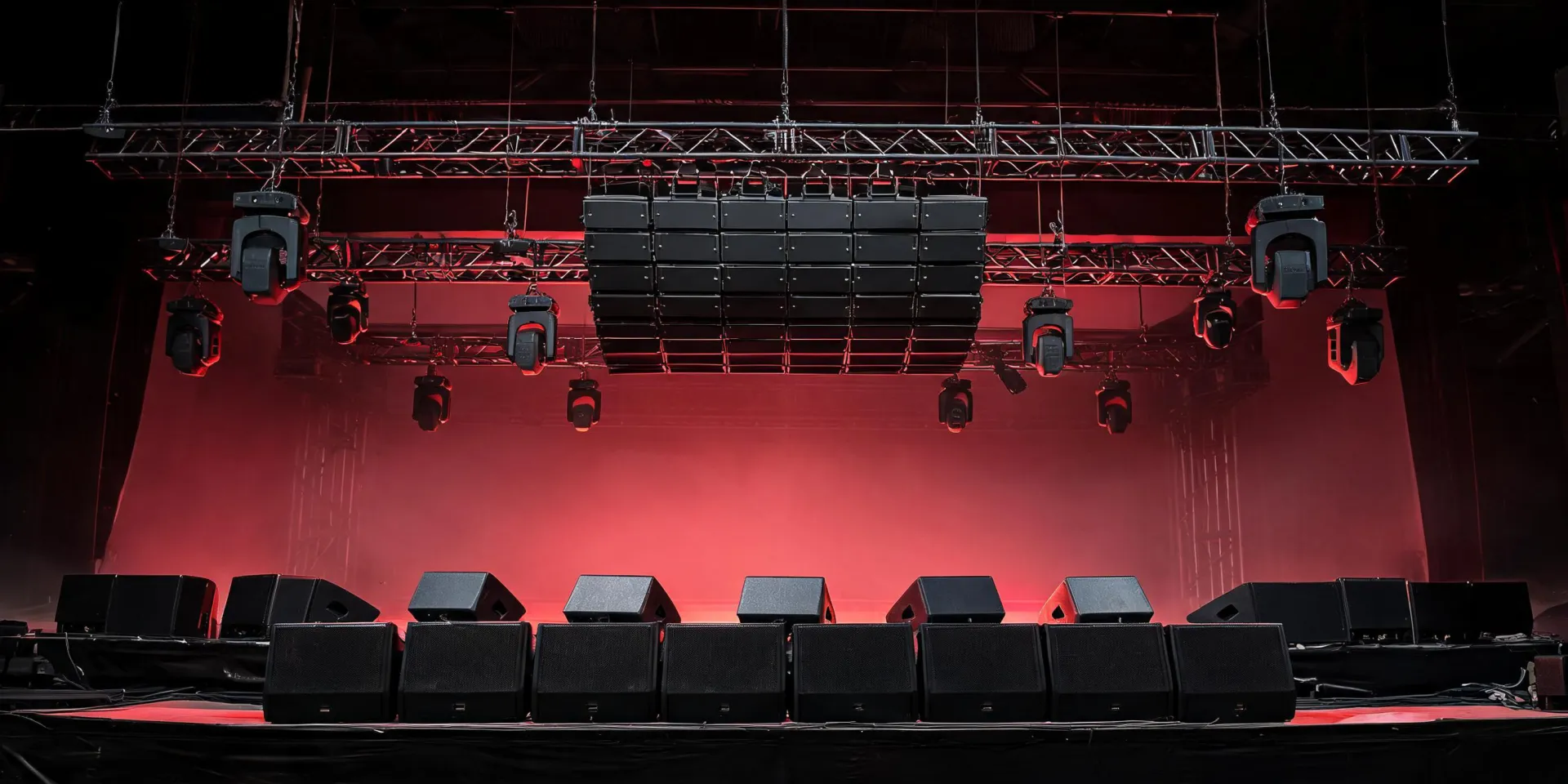
Start with coverage, output, low-frequency extension, and deployment method—then match the loudspeaker family to the job instead of choosing by cabinet size alone.
A useful system brief connects acoustic intent to electrical, mechanical, and operational constraints.
Define audience geometry, listening distance, and aiming boundaries before comparing SPL figures measured under different conditions.
Document expected program material, target level, crest factor, and duty cycle so amplifier and limiter decisions have context.
Flown arrays, pole-mounted PA, portable columns, and floor stacks impose different load, transport, and setup requirements.
Use repeatable test signals, stored presets, polarity checks, and listening positions to confirm that the installed result matches the design brief.
Published figures become useful only when bandwidth, test conditions, coverage, processing, and deployment are evaluated together.
| Horizontal pattern | Match the seating width at the intended throw distance. |
|---|---|
| Vertical behavior | Account for audience depth, balcony faces, and reflective boundaries. |
| Aiming record | Save angles and reference positions for commissioning. |
| Bandwidth | Compare the stated tolerance and required subwoofer crossover. |
|---|---|
| Maximum level | Confirm measurement method, distance, and limiter state. |
| Headroom | Evaluate program crest factor at the actual operating level. |
| Signal path | Record source, routing, processing, amplification, and loudspeaker preset. |
|---|---|
| Power plan | Verify branch loading, connector standard, and cable route. |
| Acceptance test | Repeat polarity, noise, level, and coverage checks after setup. |
Each profile changes the priorities that drive the system decision.
Fast changeovers favor predictable rigging, stored processing, clear patch documentation, and serviceable transport.
Verify: pick points + presetSpeech intelligibility, sightline control, low visual impact, and volunteer-friendly recall often outrank peak output.
Verify: coverage + repeatabilityFlexible zoning and input workflows must support presentations, live music, and community events without rebuilding the system.
Verify: modes + operator handoffapproved product categories
system decision lenses
commissioning checkpoints
documented system brief
These numbers describe this site's evaluation framework, not manufacturer output or market claims.
Share venue dimensions, audience layout, program type, deployment method, and target level. The reply can then focus on configuration questions that matter.