Capture
Audience planes, room surfaces, hang points, power, program, and operating roles.
Innovation is useful when it shortens uncertainty: clear input data, traceable processing, controlled deployment, and evidence gathered at representative listening positions.
Follow the workflow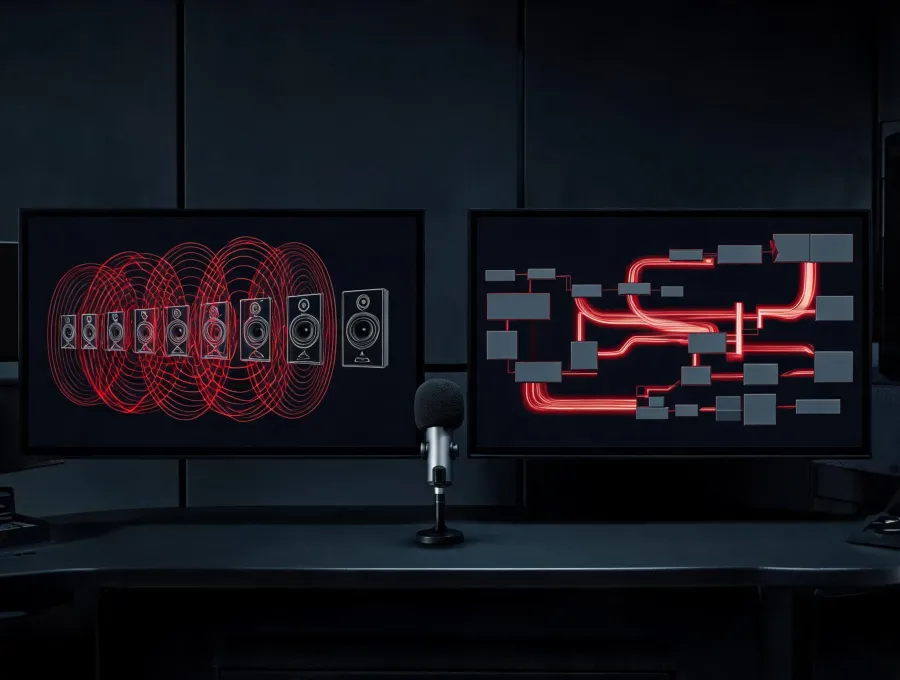
Each gate produces an artifact that can be reviewed before the next commitment.
Audience planes, room surfaces, hang points, power, program, and operating roles.
Coverage, aiming, level distribution, low-frequency approach, and constraint flags.
Product family, processing, amplification, networking, rigging, and cable paths.
Preset ownership, labeling, patch verification, and known-good test signals.
Polarity, timing, response, level, and coverage at documented positions.
Operating modes, safe limits, recovery steps, files, and acceptance record.
Prediction can compare aiming and geometry before deployment. Its result depends on correct loudspeaker data, room geometry, audience planes, and modeling assumptions; it is not a substitute for commissioning measurements.
Evidence: model file + assumptionsFilters, delay, limiters, and routing can create a repeatable starting point. Firmware, gain structure, adjacent devices, and user edits still affect the final behavior.
Evidence: versioned preset + signal mapTransfer-function, polarity, noise, and level checks can expose deployment errors. Microphone position, environment, calibration, and test signal must be recorded for the result to be compared later.
Evidence: method + positions + resultNo public partner or client assets were supplied for this build, so this section names roles instead of inventing endorsements.
Defines coverage intent, prediction assumptions, and acceptance criteria.
Reviews loads, support conditions, and project-specific rigging requirements.
Coordinates devices, cabling, control, commissioning, and documentation.
Validates daily modes, access levels, recovery steps, and training needs.
Counts describe the method presented here; they are not manufacturer scale or performance claims.
Bring the prediction inputs, device list, signal path, and acceptance target. The next discussion can focus on gaps rather than slogans.